
You have just set up your first 3D printer, leveled the bed, and loaded your first spool — and now comes the question every beginner asks: which filament should I actually buy? Walk into any filament listing and you will find dozens of materials, diameters, and colors, each promising perfect prints. The truth is simpler. For most first projects, one material covers almost everything you want to make, and a small multi-color bundle is the smartest way to learn what you like.
What Is PLA, and Why Do Beginners Start Here?
PLA, short for polylactic acid, is a plant-based plastic made from renewable resources such as corn starch. It has become the default starting material for home 3D printing for good reasons. It prints at relatively low temperatures, sticks well to a standard print bed, warps far less than materials like ABS, and produces very little odor while printing. That combination means fewer failed prints and less frustration while you are still learning how your printer behaves.
PLA is also forgiving. If your first layer is slightly off, or your temperature is a few degrees from ideal, PLA will usually still give you a usable print. That forgiveness is exactly what a beginner needs. You learn calibration, supports, and slicing settings by actually finishing prints, not by troubleshooting exotic materials. Save the engineering filaments for later; start with the material that lets you build confidence.
What Eight Colors Actually Give You
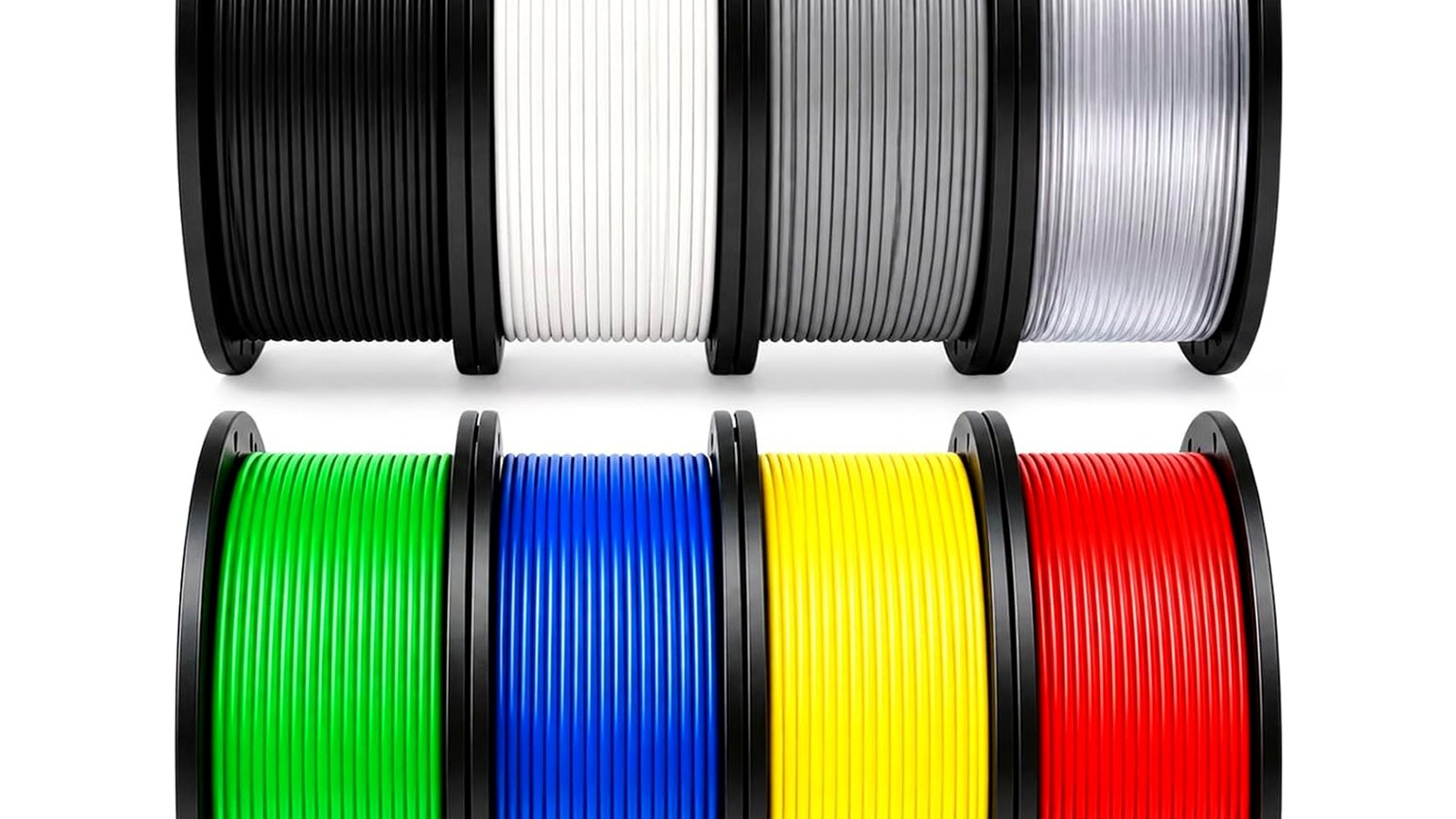
A bundle like the PLA+ 3D Filament Bundle includes eight colors — black, white, grey, clear, green, blue, yellow, and red — and each one earns its place. Black and white are your workhorses: prototypes, brackets, phone stands, and anything you plan to paint later. Grey is ideal for detailed models where you want to see every layer and surface flaw, which makes it a favorite for checking a design before a final print.
The bright colors are where the fun starts. Red and yellow make toys, cosplay accents, and holiday decorations pop. Blue and green suit planters, desk organizers, and kids' projects. Clear filament is the wildcard: it is great for lampshades, light diffusers, and decorative pieces where you want light to pass through. Having all eight on hand means you can match a project to a color immediately, instead of pausing a fun idea to wait for a delivery.
Color also teaches you something practical. Different pigments can behave slightly differently, even within the same brand. A bright red may string a little more than a plain black, and a clear filament may need a touch more cooling. Working through a multi-color bundle is a low-stakes way to learn those small differences — and to discover which colors you reach for again and again.
Why 200g Spools Are Ideal for Beginners
Each spool in this bundle holds 200g, with eight spools totaling 1600g. That size is a deliberate advantage for someone starting out. A full 1kg spool of a single color is a big commitment when you are not yet sure what you like to print. Smaller spools let you try many colors without tying up money or shelf space, and you finish spools fast enough to learn what a fresh spool versus an older one feels like.
Small spools also reduce waste from a common beginner mistake: buying a huge spool, printing twice, and letting the rest absorb moisture for months. With 200g spools, you can keep unopened spools sealed until you need them, and work through one color at a time. For classroom projects, gifts, and weekend experiments, that flexibility beats bulk almost every time.
Your First Print Checklist
Before your first print with a new spool, run through a short checklist. First, check that your printer uses 1.75mm filament, the standard size for most home printers, and confirm this bundle matches. Second, load the filament until it flows cleanly from the nozzle, and watch the first layer go down: it should be squished slightly flat, not round like spaghetti and not so thin it tears. Third, start with a small test print — a calibration cube or a simple phone stand — before committing to a ten-hour model.
Temperature guidance helps here. PLA generally prints well in the range your printer's default PLA profile suggests, and the bundle is designed to work with standard PLA settings. If you see stringing, add a little retraction or cooling; if layers are not bonding, nudge the temperature up slightly. Change one setting at a time and note what helped.
Key takeaways: PLA is the best beginner filament because it is forgiving, low-odor, and easy to print. Eight colors cover prototypes, detailed models, and colorful fun projects in one bundle. Small 200g spools let you experiment without waste or commitment. Always test with a small print before a long one, and change only one setting at a time.
Common Beginner Mistakes to Avoid
The most common beginner mistake is not the filament at all — it is moisture. PLA absorbs humidity from the air, and damp filament can cause popping, stringing, and rough surfaces. Store open spools in a sealed bag or box with desiccant, especially in humid climates, and keep unopened spools sealed until you need them. If a spool starts printing badly after weeks on an open shelf, moisture is the first suspect.
The second mistake is skipping bed leveling. No filament can save a print that starts on an unlevel bed. Take five minutes to level properly, and your first layer will reward you. The third mistake is printing too fast. Slow down for your first few prints, especially on detailed models, and increase speed only once your settings are proven. Speed is easy to add later; a failed overnight print is not.
Storing Your Filament Between Prints
Good storage is simple: cool, dry, and sealed. Keep spools out of direct sunlight, which can degrade plastic over time, and away from dusty workshops when possible. A zip bag with a silica gel packet is enough for most homes; a sealed storage bin works for a growing collection. Label each spool with the color and the date you opened it, so you always know which spool is freshest.
Takeaway: Starting 3D printing does not require a shelf full of exotic materials. A forgiving PLA, eight useful colors, and small spools you can actually finish are enough to learn, experiment, and make things you are proud of. Start with the PLA+ 8-Color Bundle, print small, store dry, and let your projects teach you the rest.