
It happens every year, right on schedule. The heat comes on, the air outside turns sharp and dry, and your face starts to feel like it belongs to someone else — tight after washing, a little flaky around the nose and brows, and somehow both dry and dull at the same time. Winter skin is not a mystery, and it is not a personal failing. Cold air holds less moisture, indoor heating pulls even more out of the air, and hot showers strip the skin's surface oils. The result is a moisture deficit that an ordinary summer routine simply cannot cover. A winter routine does not need to be complicated — it needs to be deliberate about one thing: keeping moisture in.
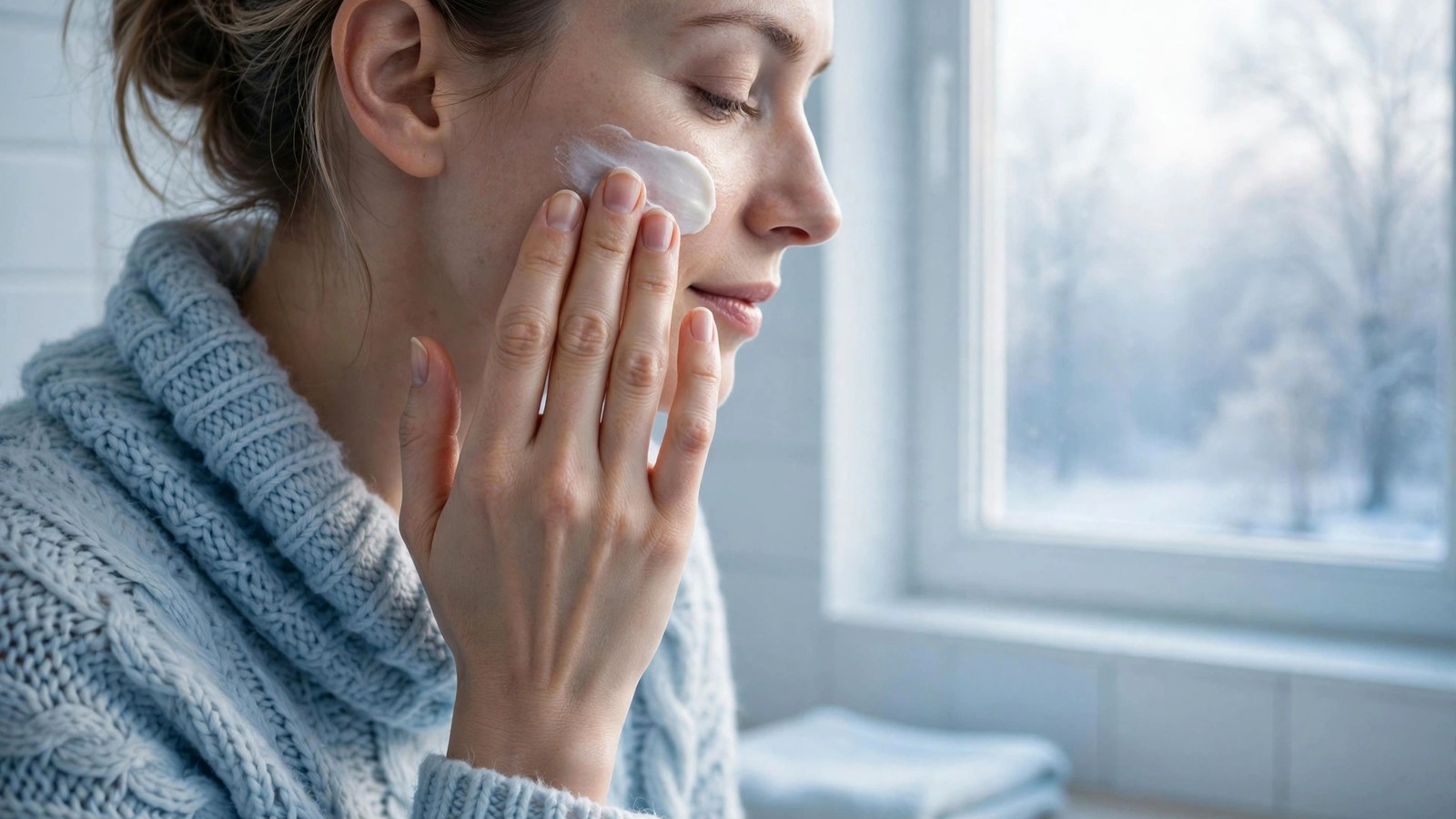
Why winter dries your skin out so fast
Healthy skin keeps moisture in with a barrier of natural oils and skin cells, a bit like mortar between bricks. In winter, three things attack that barrier at once. Cold outdoor air is naturally low in humidity. Heated indoor air is even drier, because warming air drops its relative humidity. And the habits winter encourages — long hot showers, harsh cleansers, rough towel-drying — strip surface oils faster than the skin can replace them. The barrier weakens, water escapes, and the skin responds with tightness, flaking, and sensitivity.
This is why winter skin often feels worse indoors than outdoors. You come in from the cold expecting relief, but the heated room is the driest place of all. If your skin feels tight within minutes of washing, or your usual moisturizer seems to "disappear" by midday, the barrier is asking for more support — not a stronger product, but a smarter layering routine that seals moisture in rather than just adding it on top.
The key idea: winter skincare is less about adding more products and more about stopping moisture loss. Cleanse gently, apply hydrating layers while skin is still slightly damp, and finish with a cream that helps seal everything in.
What peptides and collagen actually do in a cream
Two ingredients show up again and again in winter face creams: peptides and collagen. They are related but not the same, and knowing the difference helps you choose. Collagen is a large structural protein that gives skin its firmness and bounce. Applied on the surface, collagen molecules are too large to sink deep into the skin, but they are excellent humectants — they sit on the surface and help hold water there, which is exactly what tight winter skin needs. A cream with collagen is designed to leave the surface feeling plumper and more comfortable, not to rebuild collagen from below.
Peptides, by contrast, are short chains of amino acids — the small building blocks that make up proteins like collagen. Because they are smaller, peptides are traditionally used in skincare to signal the skin to support its own firmness and smoothness over time. A peptide collagen cream combines both approaches: collagen for surface hydration and comfort, peptides for longer-term support of a firmer-looking surface. Neither is a medical treatment, and neither works overnight — think weeks of steady use, not a single dramatic application.
Building a simple winter face routine
Step 1: Cleanse gently, once or twice a day. Switch to a mild, non-foaming cleanser in winter, and skip the hot water. Lukewarm water cleans just as well without stripping surface oils. If your skin is very dry, a water-only rinse in the morning is often enough, with a proper cleanse at night.
Step 2: Apply to damp skin. This is the easiest upgrade most people miss. After cleansing, pat — do not rub — until skin is just barely damp, then apply your cream. Damp skin absorbs and holds a moisturizer better than fully dry skin, and it costs you nothing extra.
Step 3: Seal with a peptide collagen cream. Press a small amount of the Peptide Collagen Firming Essence Cream over the face and neck, focusing on the areas that feel tightest — usually the cheeks, jawline, and around the brows. The precision applicator helps place a thin, even layer without waste, which matters when you are using a cream twice a day all winter.
Step 4: Do not skip daytime protection. Winter sun is weaker but still present, and snow reflects UV back up at your face. If you spend time outdoors, a sunscreen over your morning cream is still worth it — dry winter skin is already irritated, and sun exposure adds to that.
Common winter skincare mistakes to avoid
Over-exfoliating. Flaky skin tempts you to scrub it away, but aggressive exfoliation in winter usually makes flaking worse by damaging the barrier further. If you exfoliate, cut back to once a week and choose a gentle formula.
Skipping moisturizer because skin feels oily. Combination skin can feel oily in the T-zone and tight on the cheeks at the same time. That tightness is still dryness, and skipping cream on those areas only deepens it. Use a lightweight layer everywhere, and a little extra where it feels tight.
Ignoring the neck and hands. The neck and hands get the same cold, dry air as the face but are often left out of the routine entirely. Whatever cream you use on your face, carry the leftover down the neck and over the backs of the hands — it takes five seconds and prevents the crepey, dry look that gives winter away.
What to expect, realistically
A good winter cream should make skin feel more comfortable within a few days — less tightness after washing, less visible flaking, a softer surface. Firmer-looking skin, if it comes, builds gradually over several weeks of consistent use. No cream can change your skin type, reverse aging, or fix conditions like eczema or rosacea, and if winter dryness comes with cracking, bleeding, or persistent red patches, that is a conversation for a dermatologist, not a cosmetics counter. The honest goal of a winter routine is modest and valuable: skin that feels comfortable, looks healthy, and gets through the cold months without constant irritation.
Takeaway: winter dryness is a moisture-loss problem, not a skin failure. Cleanse gently, apply cream to damp skin, and use a peptide collagen cream to help lock hydration in and support a smoother, firmer-looking surface. Keep the routine simple, use it twice a day, and let consistency — not product count — do the work.
Shop the Peptide Collagen Cream
This is a self-care product, not a medical treatment. Consult a healthcare professional for medical advice.