
It usually starts after the house goes quiet. The lights go off, everyone settles in — and your dog starts pacing the hallway, or your cat disappears under the bed and refuses to come out. Some pets whine softly at the bedroom door; others scratch, circle their bed, or follow you from room to room as if the day is not quite over. Nighttime restlessness in pets is frustrating for everyone, and it often has less to do with energy than with comfort: when the household winds down, the sounds, movement, and company that filled the day suddenly stop, and some animals find that change hard to settle into.
Why some pets struggle to settle at night
Pets are creatures of routine, and evenings are full of small signals that the day is ending: dinner is served, the television goes on, people stop moving around. For a confident, well-rested pet, those signals mean sleep. For an anxious one, they can mean the opposite — the moment the house quiets down is the moment they notice they are on their own. Rescue pets adjusting to a new home, puppies and kittens in their first weeks, and older pets whose routines have changed are all more likely to pace, vocalize, or hide at night.
Other triggers stack on top of routine: a thunderstorm rolling through, fireworks in the distance, a recent move, a family member away on a trip, or simply a day with too little play and too much alone time. None of this means a pet is "bad" or badly trained. Restlessness is communication — the animal is saying, in the only way it can, that it does not feel settled. The goal is not to silence that signal but to give the pet something steady and reassuring to settle next to.
The key idea: an anxious pet at night usually needs a steady presence, not more stimulation. A calm, predictable companion — the same shape, the same gentle rhythm, the same spot every evening — can become the cue that tells your pet it is safe to rest.
How a breathing motion may help a pet relax
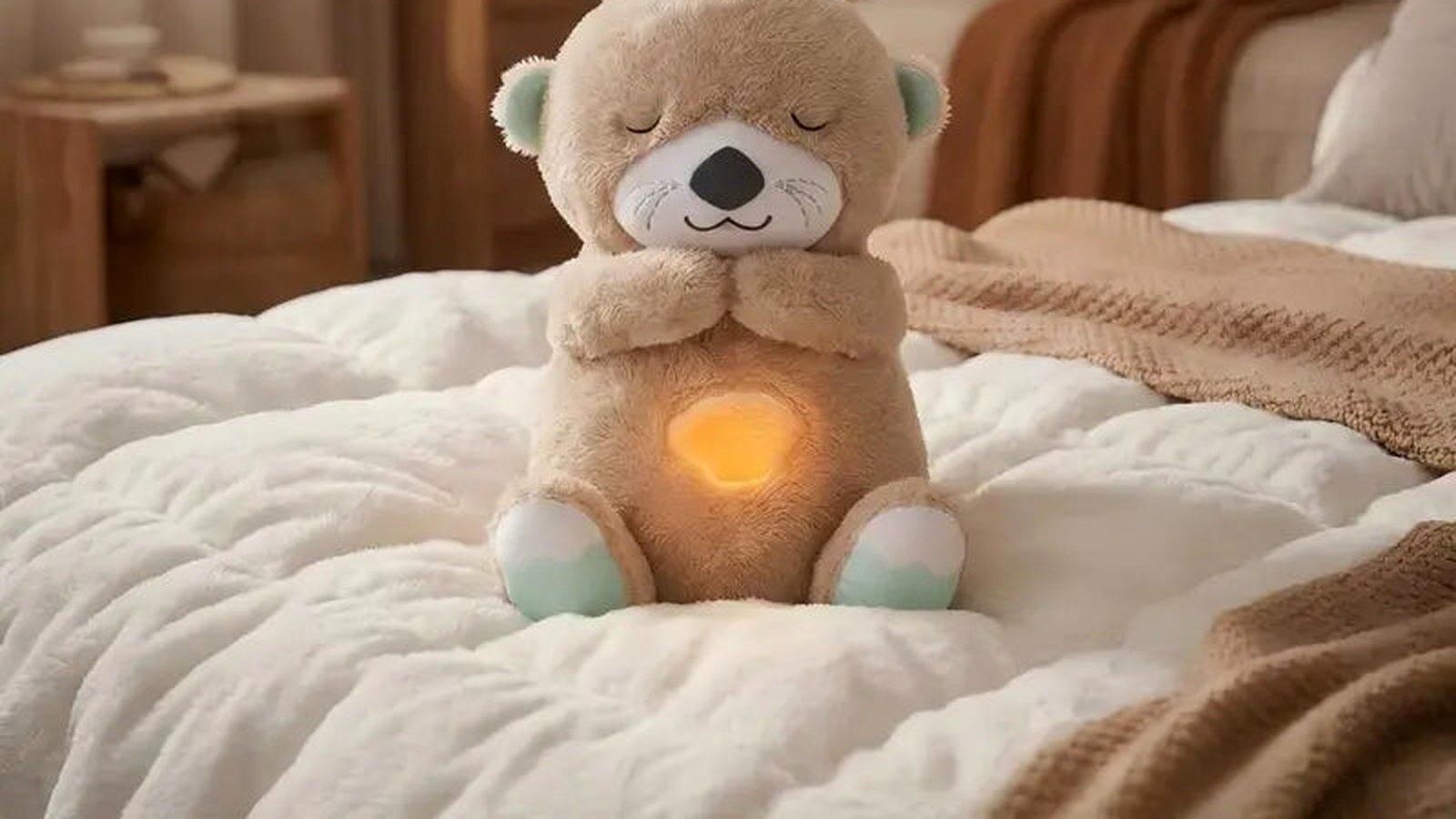
The Breathing Otter Toy is designed around one simple idea: a slow, rhythmic rise and fall, like calm breathing. When the toy is switched on, its belly gently moves up and down in a steady rhythm. For a pet curled up beside it, that motion is something to lean against and match — a quiet, repeating pattern in a house that has otherwise gone still.
There is nothing magical about this, and it is not a substitute for training or veterinary care. But steady rhythms are widely used as comfort cues: a ticking clock near a puppy's crate, a heartbeat toy for a new kitten, a metronome for a nervous animal. The breathing otter works on the same principle, with the added advantage that it is soft, huggable, and shaped like a sleeping animal itself — something a pet can actually snuggle rather than just hear.
Music and a warm glow complete the routine
Motion is only one part of the toy. It also plays gentle music and glows with a soft orange light from its belly, like a night-light. The combination matters because pets respond to more than one sense at once: the glow gives a drowsy, low-light cue in a dark room, the music fills the silence that follows everyone going to bed, and the breathing motion gives the body something to settle against. Together, they recreate a little of the warmth and company of daytime — without you having to stay awake to provide it.
The light is soft and warm rather than bright or flashing, so it can stay on through the night without turning the room into a light show. The controls are simple too: a side switch for light and breathing, with a long press to adjust, so you can set it once as part of the bedtime routine and leave it. It runs on 3 AAA batteries tucked into a discreet zippered compartment, so there are no cords to chew and no charging cable to hunt for at midnight.
Building a calming bedtime routine around the toy
Keep the same spot every night. Place the otter in your pet's bed or crate, in the same place each evening. Pets learn locations faster than they learn objects: "the otter in my bed" becomes a stronger cue than "the otter" alone.
Wind down before lights-out. A short play session followed by a calm ten minutes — a gentle brush, a quiet cuddle, a small treat — helps burn off the last of the day's energy. Switch the otter on as part of that wind-down, not after your pet is already pacing.
Pair it with something familiar. A blanket that smells like you, or the pet's usual bed, helps the new toy feel like part of the routine rather than a stranger in the bed. Most pets accept a new comfort object faster alongside familiar smells and places.
Watch the first few nights. Every pet reacts differently. Some curl up against the toy immediately; others sniff it suspiciously for a week before deciding it is acceptable. Supervise at first, especially with strong chewers, and treat the toy as a comfort companion rather than a chew toy — it is designed for snuggling, not for tug-of-war.
When restlessness needs more than a comfort toy
A breathing toy may help everyday nighttime restlessness feel more manageable, but it is not a treatment for anxiety disorders or health problems. If your pet's restlessness is sudden, severe, or getting worse — destructive behavior, loss of appetite, house-training changes, excessive grooming, or signs of pain — talk to your veterinarian first. Some nighttime restlessness has a medical cause, from joint discomfort in older pets to urinary issues or cognitive changes, and no comfort product can address those. Think of the otter as one piece of a calm evening, alongside exercise, routine, and professional advice when needed.
Takeaway: a pet that cannot settle at night is usually asking for steadiness, not excitement. A breathing otter toy offers a gentle, repeating rhythm, soft music, and a warm glow — a small, predictable companion that may help your dog or cat relax into sleep. Set it in the same spot each night, wind down together, and give your pet a few evenings to adopt it as part of the routine.
This is a comfort product, not a veterinary treatment. For persistent anxiety, sudden behavior changes, or health concerns, consult a veterinarian.