
November is the month feet disappear. Out come the boots — warm, sturdy, closed-toe — and feet that spent the summer in sandals suddenly spend ten hours a day in the dark, pressed against socks and insoles. That is exactly when toenail problems announce themselves: a nail that catches on a sock, pressure on the big toe after a long walk, or a thick nail that has quietly outgrown its trimmer. A little pre-winter toenail care now can save you a season of discomfort, and it starts with one honest look at your feet before boot season settles in.
Why boots make toenail care matter more
Summer footwear is forgiving: open toes, soft straps, room to move. Boots are not. A snug toe box presses nails against the shoe with every step, and thick socks add pressure on top. If a nail is too long, it can press into the toe next to it or catch on fabric; if it is cut too short or rounded at the corners, the surrounding skin can become irritated as the nail grows back under pressure. Add winter dryness — heated indoor air, hot showers, less barefoot time — and nails can become brittle, thick, or prone to splitting.
Thick toenails deserve special attention before winter. They change slowly, so it is easy not to notice how thick they have become until a standard clipper starts struggling: crushing instead of cutting, slipping off the nail, or needing several attempts. A trimmer that cannot cut cleanly makes every trim harder and rougher, which is the opposite of what feet in boots need.
The key idea: boot season does not create toenail problems — it reveals the ones summer footwear hid. A careful pre-winter trim, with a tool that can actually handle thick nails, is the simplest way to get ahead of a season of pressure and pinching.
A pre-winter toenail checklist
Start with a soak. Ten minutes in warm water softens nails and skin, making the trim cleaner and more comfortable. Dry your feet thoroughly afterward — trimming wet, slippery nails is harder to control, and moisture left between toes is never a good idea.
Trim straight across, not rounded. Cut the nail straight across and leave a small margin of white at the tip — do not cut down into the corners or cut the nail very short. Rounded corners and overly short cuts are the classic setup for irritation as the nail grows back, especially under the pressure of a boot.
File, do not tear. After trimming, smooth the edges with a file in one direction. Filing takes care of sharp corners and tiny snags that catch on socks, and it is gentler than pulling or tearing at a rough edge.
Moisturize feet, not between toes. A good foot cream on the heels and soles helps with winter dryness and cracking. Skip the spaces between toes, where trapped moisture can cause its own problems, and let feet dry fully before putting socks on.
Check your boots, not just your nails. Press the toe box: your longest toe should have a little wiggle room, not touch the end. If a pair of boots pinches even with thin socks, no trim will fix that — the boots are the problem, and a roomier pair or thinner sock is the honest answer.
Choosing a trimmer that handles thick nails
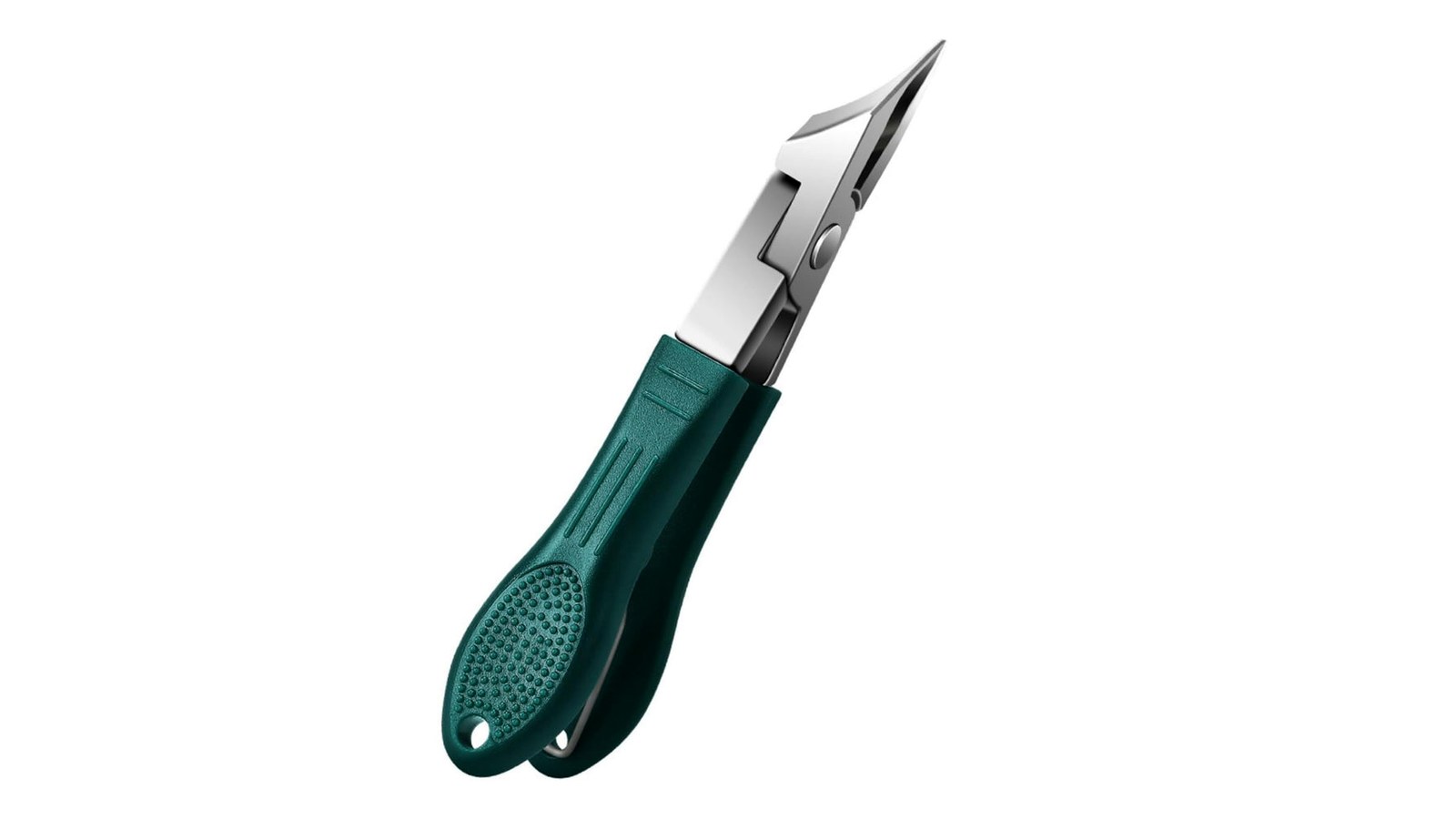
For thin, soft nails, almost any clipper will do. Thick nails are a different job, and the tool matters. The Ingrown Toenail Clipper is built for exactly this: a sharp, wide-opening jaw that fits over thick nails instead of crushing them, and an angled blade that helps you reach the nail cleanly without awkward hand positions. The non-slip handle matters more than it sounds — a tool that stays steady in your hand gives a cleaner cut, and a clean cut is what keeps edges smooth and comfortable.
Technique matters as much as the tool. Trim in small cuts rather than trying to take off a large piece at once, especially on thick nails. Work in good light, sit comfortably with the foot supported, and take your time — rushing a toenail trim is how corners get nicked and edges get jagged. If a nail is very thick, yellowed, or painful, or if you have diabetes or poor circulation, skip the home trim and see a foot care professional first: some feet need professional care, and knowing that is part of good foot care, not a failure of it.
A simple winter foot routine to keep
Once the pre-winter trim is done, maintenance is light. Check your nails every two to three weeks through winter — boots hide them, so problems are easy to miss until they hurt. Trim little and often rather than waiting until nails are long, and re-check boot fit if you switch to thicker winter socks. Wash feet daily, dry them well (especially between toes), and give them a few minutes of air before socks go on. On days when you are home, a short barefoot break lets feet breathe after hours in boots.
Pair the routine with the rest of your winter self-care: warm socks that are not too tight, insoles that support rather than squeeze, and a moment after a long day to stretch your toes and roll your feet. Feet carry you through the coldest months of the year, mostly unnoticed — a few minutes of attention before winter is a small way of returning the favor.
Takeaway: before boots become your daily footwear, give your toenails one careful session: soak, trim straight across, file the edges, moisturize, and check your boot fit. With a sharp, wide-opening trimmer that can handle thick nails, the whole job takes minutes — and your feet will feel the difference all winter.
This article is general self-care information, not medical advice. For persistent pain, redness, swelling, or foot concerns related to diabetes or circulation, consult a healthcare professional.